The Ghosts of Highgate and The Ink Black Heart
The tour group moved off again, Robin wondering whether she found the cemetery more beautiful or creepy. On every side, ivy, grass, ferns, brambles and tree roots had run amok, mocking the formal grandeur of the monuments. Creepers had shifted the heavy stone lids of tombs; ferns had sprouted on graves where no flowers had been laid for a century; tree roots had lifted headstones that now sat crookedly, bowing to the earth.
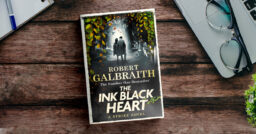
The Ink Black Heart, Robert Galbraith
Robin Ellacott and Cormoran Strike have made their reputation dealing with flesh and blood horrors, but the search for the killer of Edie Ledwell leads them into Highgate Cemetery, and that is also the domain of the supernatural monsters native to Halloween and the coming of winter.
Highgate Cemetery provided inspiration for a cartoon, The Ink Black Heart, created by Edie and her boyfriend Josh Blay. Its success brings them a legion of fans, but after some of them begin to harass Edie, she comes to the agency for help. After her murder, Strike and Robin are hired to discover the identity of her most venomous troll, Anomie. But what in Josh and Edie’s cartoon comes from Highgate itself, and what comes from other folk stories and scraps of history which they blended to create their surreal, dark and funny hit series?
‘we, er, got the idea for The Ink Black ’eart when we was in ’Ighgate Cemetery one afternoon—’ ‘Smoking,’ came Tim’s voice.
‘Feelin’ crea’ive,’ said Josh, mock-dignified.
The Ink Black Heart, Robert Galbraith
Highgate Cemetery was consecrated in 1839, and the first person to be buried there was Elizabeth Jackson of Soho. There are now more than fifty thousand burials at the cemetery, and some thirty or so people join Elizabeth there each year. When it was first built it was a popular recreation spot, and the elaborate tombs the Victorians built for themselves, or their loved ones, created a network of gothic sculpture which suited the romantic mood of the period. It also advertised armed guards, an attraction for a population still traumatised by stories of grave robbers, though that particular crime came to end before the cemetery was opened with the passing of the Anatomy Act in 1832.
Many famous people of the day were buried there, including George Eliot, author of Middlemarch, poet Christina Rossetti, and author of the communist manifesto, Karl Marx. Also – here’s one for fans of detection stories – buried in Highgate is Adam Worth who was dubbed ‘the Napoleon of the criminal world’ by Scotland Yard detective Robert Anderson and is said to be the inspiration for James Moriarty in the Sherlock Holmes stories.
In the nineteen sixties and seventies the cemetery fell into disrepair. The company which ran the graveyard agreed to maintain the graves in perpetuity for a one-time fee when someone was buried, but as space ran out new fees dwindled and the company went bankrupt. The cemetery was all but abandoned. Now it wasn’t being maintained, nature took over. Fast growing trees, ivy and ferns spread over the site, knocking many of the graves askew, creating a rich new ecosystem and a unique space which Robin can’t decide is very beautiful or very creepy. It also became in the seventies a favourite spot for trespassers and seekers of occult thrills which added to its gothic reputation and atmosphere.
I wanted to put the vampire in. They fort there was a vampire in the real cemetery, in the seventies. Edie fort it was corny, ’avin’ a vampire, but I drew ’im so she could see what I was finking.
The Ink Black Heart, Robert Galbraith
Josh’s bumbling and starving vampire didn’t make it into the cartoon, but does appear in Drek’s Game – the fan built online spinoff ruled by Edie’s troll, Anomie. As Josh says, there were a spate of reports in the late sixties about an actual vampire at Highgate. Its backstory and nature depended on which paranormal investigator you spoke to, but stories were plastered all over the press, alongside reports of sightings and satanic rituals. Thrill seekers, investigators and even a mob of journalists turned up for a mass vampire hunt in March 1970. The hunters caused a lot of damage and found no vampire. The fuss though drew attention to the dangerous and neglected state of the cemetery and in 1975 The Friends of Highgate Cemetery Trust was set up. It is an independent charity created to care for and maintain the site, which it still does today.
The animation was still muted: Harty backed fearfully away from a figure emerging slowly from the tomb’s doorway. It was large, hunched and cloaked in black, with an exaggerated beak-like face.
The Ink Black Heart, Robert Galbraith
Fan and sometime friend of Josh, Kea Niven, claims that Harty was inspired by a story she once told Blay. The story, which is part of the folklore of Kings Lynn where she lives, is that when in 1590 a witch called Margaret Read was burnt at the stake in the town square ‘her heart, like, burst out of her and hit the wall.’ The legend rests on an eleven-word account in Benjamin Mackerell’s History and Antiquities of the Flourishing Corporation of King’s-Lynn which was published in the late 18th century and doesn’t mention the heart. There is still a mark on the wall though, which is where it allegedly hit.
Edie though, in an early interview about the series, says she remembers being told a story of somebody swapping their heart with a stone, and getting a mental image of a heart leaving a chest. In the cartoon, Harty the heart is now trying to be better than the evil person to whom he once belonged. The story Edie remembers is probably The Cold Heart, which was published by Wilhelm Hauff in 1827. A poor man is tricked into a deal to trade his heart for a stone in return for great riches. It doesn’t go well, but he does manage to get his heart back in the end.
So, a cartoon about decomposing body parts, a couple of skeletons, a demon and a ghost… how do you explain its success?
Edie: Wait, is Drek a demon?
The Ink Black Heart, Robert Galbraith
Drek, who Robin sees intimidating Harty when she first watches the cartoon, is a force of chaos, and Edie’s drawings of him are inspired by the iconic beaked mask allegedly worn by doctors during outbreaks of plague on the European continent in the seventeenth century. The masks, stuffed with herbs to keep out the ‘bad air’, were never worn in England, but the drawings of the cloaked and masked ‘doctors’ in satirical woodcuts wormed their way into the popular imagination, closely associated with horrific mass deaths. They left such a mark on the culture that more than three hundred years later, Edie is still inspired by their creepiness.
‘About Paperwhite. She wants to be alive again. She hates being a ghost.’
‘She is kind of a bitch, though.’
‘Well, she’s stuck among all these—’
‘Freaks, yeah.’
‘—ambulant body parts,’ said Edie, and Josh laughed. ‘Nobody would want to be stuck there for ever.’
The Ink Black Heart, Robert Galbraith
The actual spectres alleged to haunt the cemetery include a nun, a grieving widow, and a mad old woman, but the sad, so very sad, ghost in The Ink Black Heart, Paperwhite, seems much younger. Edie took some of her inspiration for the character from an old flatmate, but she might also have been inspired by the ghost of a Spanish barmaid who haunts a local pub, The Flask. Robin hears about that ghost while playing Drek’s Game and eating crisps in the parlour as Strike interviews a potential suspect in the bar. The barmaid killed herself because of an unrequited love affair, so would probably be as miserable as Paperwhite seems to be. She is a classic spectre, beautiful, white faced and in a long white nightgown, and jealous of the living, like her sister who she complains is going out to parties while she is stuck in the graveyard being romantically pursued by a disembodied heart.
The tradition of ghosts dressed in white, floating garments probably comes from the linen shrouds in which the dead were buried when most people could not afford coffins, and ‘ghosts’ appearing in that sort of covering became common on the stage and in prints from the seventeenth century. Shrouds transformed in the cultural imagination into bedsheets with eyeholes to create the cartoon ghosts that we see decorating homes and shops as October comes to an end.
So, keep an eye out as the nights get longer. After all, Robin and Strike can’t save us from every frightening thing hiding in the dark of the cemetery, or of our own imaginations…